Inconsistent device protocols and data definitions
Models report different fields, frequencies and units, making a shared cloud data model difficult.
 Jianxu Digital JIANXU DIGITAL
IoT · Edge · Device Cloud
For projects requiring remote status, field data collection, commands, firmware management and alerts. We start with protocols, networks and device lifecycles to design the edge, cloud and business console.
Field networks, protocol differences and device states are uncertain and need explicit architectural handling.
Models report different fields, frequencies and units, making a shared cloud data model difficult.
Reconnection can produce duplicates, out-of-order data or loss, undermining reports and alerts.
The platform shows a sent command without knowing whether the device received, executed or rejected it.
Firmware, online status, certificates, logs and fault diagnosis lack a shared management entry point.
Standardize device data before rules, storage and business systems so field protocols do not leak into application logic.
Device manuals, sampling frequency, networking, control risks and site maintenance practices.
Validate registration, reporting, reconnection, commands and acknowledgements for one device type.
Device records, time-series queries, alerts, dashboards, work orders and permissions.
Logs, metrics, backup and recovery, capacity baseline, OTA strategy and handover documentation.
Shared connectivity can serve different sites, but measurement points, real-time needs, alerts and control risks require device-specific reassessment.
Device records, availability, operating parameters, faults, logs, work orders and remote configuration.
For: Equipment suppliers / After-sales teams / Rental operationsCollect PLC, controller, sensor and production-line data to analyze trends and exceptions.
For: Production equipment / Industrial facilities / Field maintenanceCollect, compare, alert on and analyze electricity, water, gas, environmental and regional data.
For: Factories / Campuses / Server rooms / Commercial facilitiesCentralize store devices, temperatures, energy, alerts, inspections and regional operations.
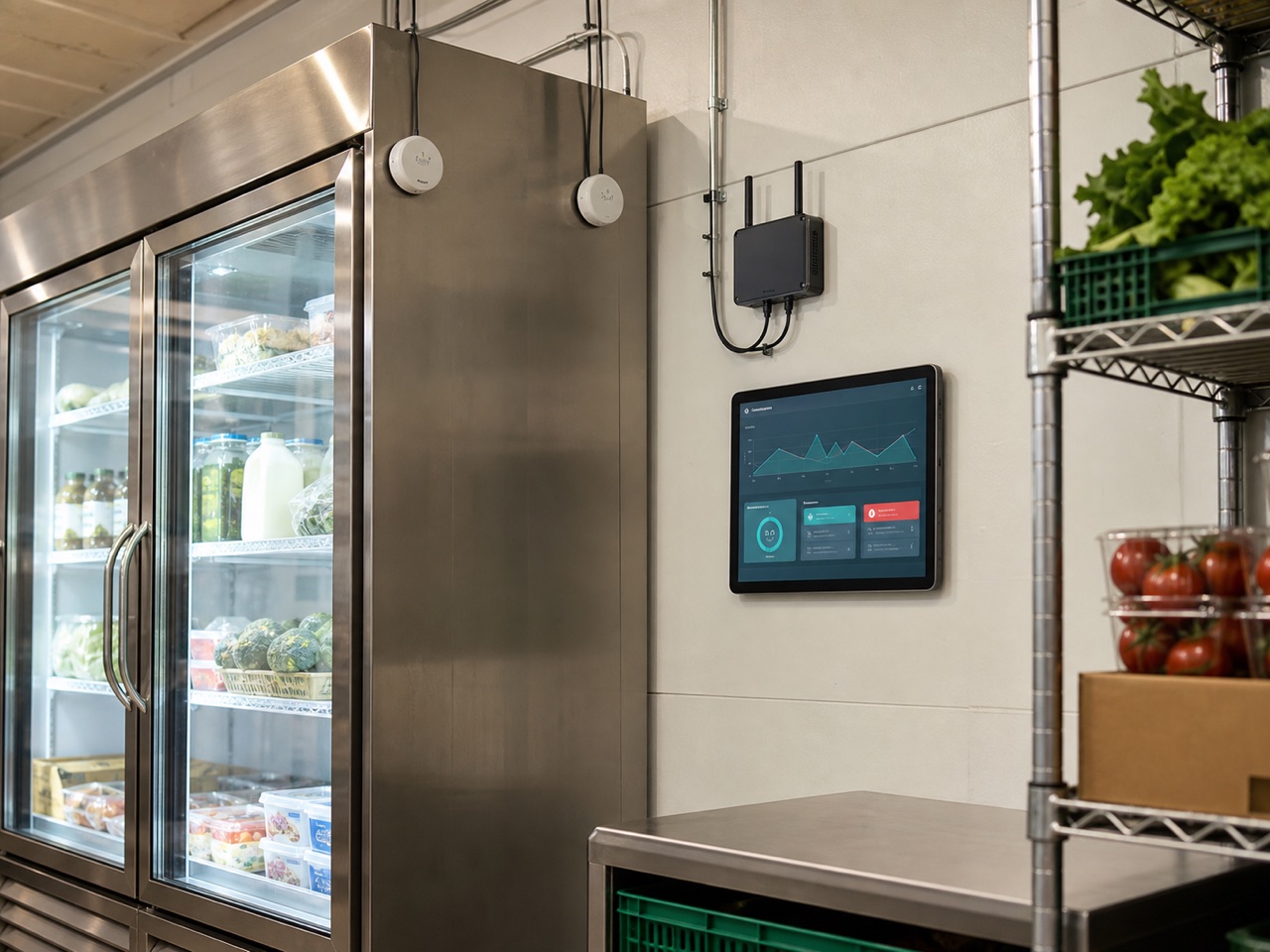
For: Retail / Food service / Cold storage / Chain operationsCollect temperature, humidity, gas, water level, smoke and safety status with graded notifications.
For: Warehouses / Laboratories / Agriculture / Special environmentsCombine barcodes, RFID, positioning and device events to record asset locations and movements.
For: Warehousing / Tooling / High-value assets / Returnable materialsThis content comes from a delivered project. Client names, production data and some business details are anonymized for confidentiality. Interfaces are redrawn from the actual system structure and do not show raw production data.
First assess protocol documentation, compute, networking and security. Standard protocols can often be adapted directly; proprietary protocols need separate development and integration.
Design local caching, sequence numbers, resumable transmission and idempotent deduplication around device and gateway capabilities, then backfill according to rules after reconnection.
Yes, after assessing safety and operational risks and designing authorization, approval, staged rollout, rollback, timeouts and execution acknowledgements.
Start with one device type, one data path and one complete workflow. Validate stability on real networks before scaling.
Share device models, protocols, site networks and the business problem. We will assess the connectivity path.
Confirm models, interfaces, protocols, sampling, networks and control limits first. For proprietary or legacy devices, validate one type before assessing large-scale connectivity.
Gateways handle protocol conversion, caching, preprocessing and required local logic. Cloud platforms handle identity, storage, permissions, rules and collaboration. Site risks and device capabilities determine what continues offline.
A sent status is insufficient. Verify device identity, command IDs, permissions, timeouts and device acknowledgements. Retain local interlocks and human confirmation where field safety requires them.