
Skip to content

Software project delivery services

From discovery to deployment and operations Turn a software project into a usable, maintainable system.

You do not need a complete requirements document. We start with spreadsheets, documents, conversations and workflows, define users, data, states and initial scope, then complete product design, development, testing and launch.

Product & requirements discovery Prototype & MVP Frontend, backend & databases Deployment, acceptance & maintenance
Illustrative scene of product and engineering staff reviewing workflows, prototypes and development boards
Business discovery · Prototype review · Engineering delivery Understand the business before development
01Scope & prototype 02Development & integration 03Acceptance & operations

Three questions before custom development

You can start without a PRD, but goals, roles, data and acceptance boundaries must be clarified first.

What materials can we start with?
Existing spreadsheets, documents, conversations, old-system screenshots and interviews with business owners.
What is delivered?
A working system, source code, database changes, deployment configuration, test and acceptance records and required instructions, within the contract scope.
How is the timeline estimated?
Timing depends on workflows, roles, data, integrations and acceptance scope. Validation and formal development schedules are agreed separately.

Explore further: Core workflow validation Source code & handover Request a current-state assessment

Core workflow validation

Experience it first. Then decide together.

After signing validation and confidentiality agreements, try one operable core workflow before deciding on formal development.

How we work
Delivery service directory

Combine ten areas of professional work according to your project, from analysis to ongoing operations.

Not every project needs every service. Discovery defines included and deferred work, client responsibilities and third-party dependencies so an all-inclusive label does not obscure delivery boundaries.

01DISCOVERY

Business research & requirements analysis

Map goals, current conditions, roles, documents, workflows, exceptions and data definitions to turn verbal ideas into confirmable scope.

  • Business interviews & current-state map
  • User roles & access boundaries
  • Requirement priorities & scope baseline
Outputs: Research notes / Workflow diagrams / Requirements list
02PRODUCT & UX

Product planning & interactive prototypes

Confirm information architecture, page flows, fields, states and key interactions before development so all roles discuss the same version.

  • Information architecture & page inventory
  • Low- to high-fidelity prototypes
  • Design standards & responsive rules
Outputs: Clickable prototype / Interface guidelines / Review records
03WEB & MOBILE

Web, mini program & app development

Build websites, H5 pages, mini programs, workspaces and cross-platform apps for users and frontline operations.

  • Responsive web & content management
  • WeChat mini programs & mobile interfaces
  • Assess login, payment, mapping & messaging integrations
Outputs: Frontend application / Release package / User guide
04BACKEND

Backend, APIs & data modeling

Build APIs, databases, tasks and management capabilities around business objects, state transitions and data relationships.

  • Business services & external APIs
  • Database & cache design
  • Queues, scheduled tasks & exception compensation
Outputs: Backend project / API documentation / Data dictionary
05INTEGRATION

System integration & data migration

Connect ERP, CRM, WMS and third-party platforms while cleaning, mapping, synchronizing and reconciling historical data.

  • API feasibility & permission checks
  • Data mapping, migration & validation
  • Idempotency, retries, logs & reconciliation
Outputs: Integration plan / Migration scripts / Reconciliation records
06IOT & EDGE

IoT, gateways & device platforms

Assess protocols, networks, gateways and control safety, then build connectivity, monitoring, alerts and maintenance capabilities.

  • MQTT / Modbus and other protocol assessments
  • Device models, telemetry & commands
  • Time-series data, alerts & dashboards
Outputs: Connectivity plan / Device platform / Field integration records
07AI & AUTOMATION

AI knowledge & workflow automation

Embed document retrieval, content processing and task routing with clear citations, permissions, evaluation and human review.

  • RAG knowledge bases & permission-aware retrieval
  • Document extraction, classification & summaries
  • Workflows, tool calls & evaluation
Outputs: Working use cases / Evaluation set / Operating boundaries
08OPS & QUALITY

Testing, deployment & maintenance

Prepare environments, releases, monitoring, backups and issue handling to move from development completion into stable operation.

  • Functional, API & critical-scenario tests
  • Deployment, domains, certificates & backups
  • Log monitoring, incident response & iteration
Outputs: Test records / Deployment materials / Maintenance checklist
09EMBEDDED

Embedded firmware & smart hardware

Develop drivers, communication, fault recovery, OTA and platform connectivity around control boards, sensors and field equipment.

  • MCU, Linux & RTOS firmware
  • Serial, CAN, BLE & proprietary protocols
  • Remote diagnostics, upgrades & production testing support
Outputs: Firmware source / Protocol components / Test & maintenance documentation
10INDUSTRIAL SOFTWARE

Host applications & industrial tools

Build desktop or web tools for device setup, production testing and field monitoring, integrated with gateways and business systems.

  • Parameter configuration & device debugging
  • Charts, logs & test records
  • Batch flashing, production configuration & data interfaces
Outputs: Applications / Configuration tools / Integration & user guides
01 · Development Path

Five controlled stages turn an idea into a system ready for launch.

Each stage has clear outputs, keeping requirements focused and avoiding a full development commitment before the direction is understood.

01

Requirements discussion

Define goals, roles, workflows, launch boundaries and budget priorities, turning a system idea into actionable tasks.

Interviews / Scope confirmation
02

Visual prototype

Create a discussable version of page structures, workflows, fields and interactions so key roles confirm direction before development.

Page structure / Interaction paths
03

MVP validation

Build only critical paths such as lead capture, booking, ordering, approvals or data entry to validate actual needs.

Focused cost / Rapid validation
04

Complete delivery

Once direction is clear, complete the frontend, backend, database, APIs, permissions, tests and deployment for sustained use.

Engineered / Maintainable
05

Continuous iteration

Improve features, experience, dashboards and AI automation through post-launch feedback as the business grows.

Feedback / Automation
Four ways to start

Choose collaboration depth according to certainty; every need does not require a complete system immediately.

Use discovery and prototypes to clarify uncertain problems, then move into engineering, migration, integration and iteration once workflows are stable.

02 · Engineering & quality approach

Tools accelerate work. People make decisions. Engineering practices support reliability.

Prototyping, coding assistance and automated tests reduce repetitive work. Project members remain responsible for scope, architecture, permissions, data security, acceptance and launch decisions, with reviewable process records.

  1. 01

    Start with a smaller budget

    Confirm direction with a focused investment before committing to full development.

  2. 02

    Reach agreement faster

    Turn abstract requirements into screens, workflows and tasks that everyone can review and refine.

  3. 03

    Validate the market earlier

    Launch a working MVP and gather feedback from actual users, internal teams and business data.

  4. 04

    More reliable engineering delivery

    People review architecture, security, permissions, testing and deployment. Generated outputs are not treated as finished products without review.

03 · Prototype And MVP

Validate the core release before deciding how far to expand.

An MVP completes the path that matters: a website captures enquiries, a mini program handles bookings, and an admin system manages key data.

Prototype

Visual prototype

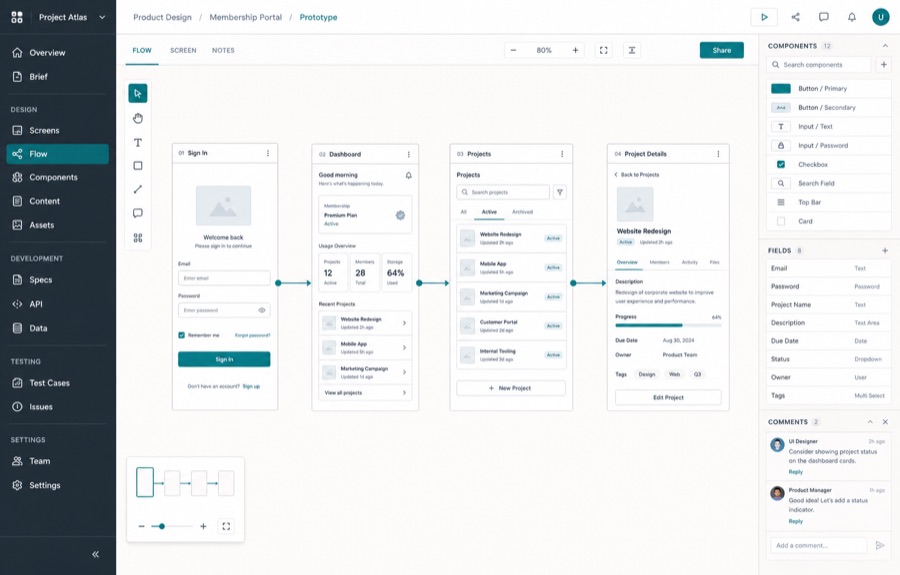
Generate initial page structures, copy, workflows and data fields for internal discussion or investor and customer demonstrations.

Illustrative prototype workspace showing page flows, field definitions and review comments
Illustrative interface · Prototype workspace
MVP

Minimum viable release

Develop the core journey and pilot it, using actual feedback to guide the next features rather than accumulating assumptions.

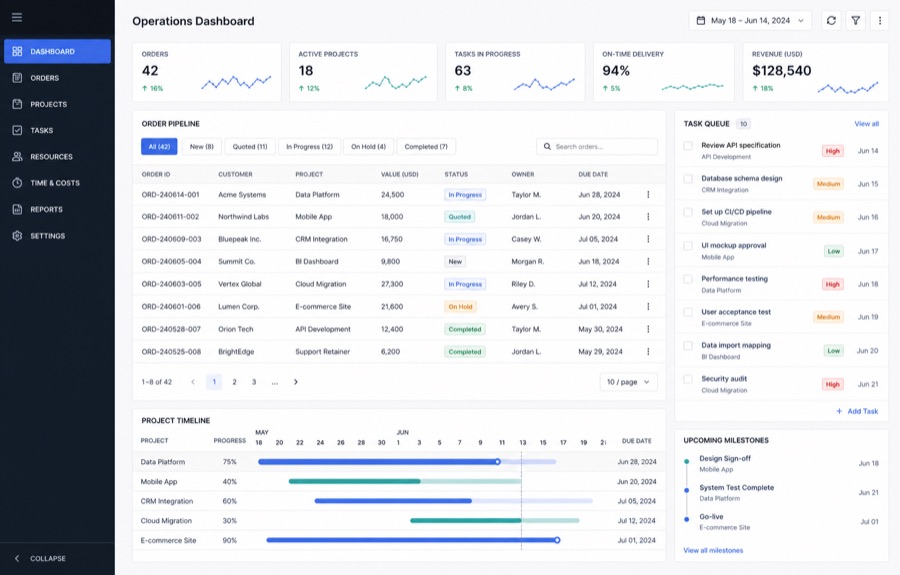
Illustrative order and project operations interface with workflows, task queues and progress
Illustrative interface · Business MVP
Review

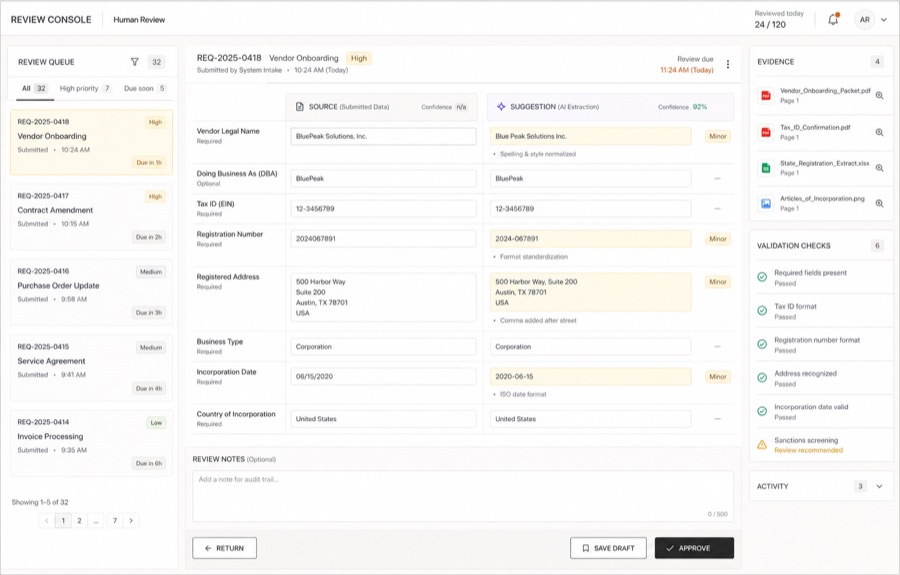
Human review

Engineers review critical interactions, business logic, data boundaries and launch quality to reduce errors in AI-generated work.

Illustrative human quality review interface with source comparisons, proposed differences, evidence and validation results
Illustrative interface · Quality review
Scale

Expansion & iteration

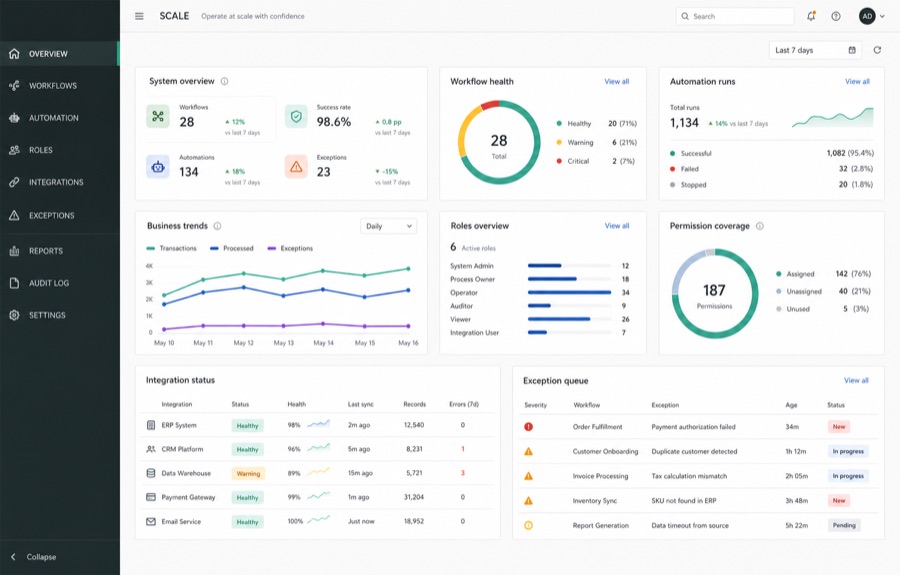
After the MVP proves useful, add permissions, reports, automation, mobile interfaces and further business roles.

Illustrative operations system showing workflows, automation, permissions, integrations and exception management
Illustrative interface · Operations console
04 · Full Delivery

Complete delivery means a system that actually runs.

Deliver the frontend, admin console, APIs, database design, roles and basic deployment.

Deliver requirements, prototype records, core workflow notes, basic user guidance and iteration suggestions.

Keep human review at critical points, especially security, business logic, payment notifications and launch quality.

Businesses and individuals can begin with a small release and gradually develop a maintainable, extensible system.

Deliverables & checkpoints

A system that can be handed over and maintained needs documentation across business, product, engineering and operations.

Actual delivery follows the contract. These common review dimensions help establish shared expectations before work begins.

Layer Questions to answer Common deliverables Verification method
Business layer Who performs which task under what conditions? How are exceptions handled? Workflow diagrams, roles, state rules & scope list Business owner review
Product layer Where do users enter? Are pages, fields and feedback complete? Prototypes, page inventory & interaction/design guidelines Visual walkthrough
Engineering layer How are code, APIs, data, permissions and quality managed? Source code, API documentation, data dictionary & test records Release & scenario acceptance
Operations layer How is the system released, monitored, backed up, restored and improved? Deployment configuration, release checklist & operations/user guides Launch rehearsal & handover
Technology & integration coverage

Prioritize stable, maintainable technologies and verify third-party requirements before development.

These are areas we can assess, not claims of official partnerships with every vendor or unconditional access to every API.

APPLICATION

Applications & interfaces

Responsive web, mini programs, H5, cross-platform apps, admin consoles, dashboards and field interfaces.

BUSINESS API

Business platform integration

ERP, CRM, WMS, payments, SMS, maps, enterprise messaging and open-platform APIs.

DEVICE

Devices & field systems

MQTT, Modbus, HTTP, WebSocket, edge gateways, sensors and control equipment.

DATA & AI

Data & intelligence

Relational databases, caches, search, time-series data, object storage, RAG and workflows.

DEPLOYMENT

Deployment & operations

Public clouds, enterprise servers, containers, reverse proxies, certificates, backups, logs and monitoring.

Collaboration options & indicative investment

Invest in stages as uncertainty decreases, rather than committing to complete development immediately.

These figures indicate starting levels, not formal quotes. Actual timelines and costs depend on roles, workflows, data, integrations and acceptance scope.

Starting approach Primary goal Typical timeline Indicative investment
Requirements & prototype Clarify the business problem, roles, workflows and first-release boundaries Scheduled against confirmed scope From CNY 3,800 Discuss scope
Business MVP Complete one usable, verifiable core workflow 2–6 weeks From CNY 18,000 Discuss scope
Complete engineering delivery Multiple roles, complex workflows, integrations & deployment support Phased milestones Quoted by scope Discuss scope
Ongoing iteration & maintenance Improve features, data, automation & operational quality Monthly or by phase Assessed separately Discuss scope

Cloud hosting, SMS, maps, payments, model usage, complex migration and external integrations are itemized during scope confirmation.

Frequently asked questions

Questions to clarify before custom software development.

Answers depend on project boundaries. Formal scope, timelines and rights follow the contract and quotation.

Can we begin without complete requirements?

Yes. Existing spreadsheets, documents, conversations, screenshots and business-owner interviews can be inputs. Start by defining problems, roles, workflows and scope rather than polishing a PRD.

How long does custom software development take?

Timing depends on roles, workflows, data, integrations and acceptance scope. We define the first phase, then provide milestones and a schedule after scope confirmation.

Can you improve only part of an existing system?

Yes. We examine code, data, APIs and deployment conditions before choosing targeted changes, new modules or gradual migration, avoiding unnecessary replacement.

Does the project include source code and deployment materials?

The contract and quote define delivery of project source code, database changes, deployment configuration and maintenance instructions. Third-party services, open-source licenses and shared components are explained separately.

Have an idea? Start with a discovery session.

Share ideas, materials, spreadsheets and conversations. We can define an initial prototype scope without a complete PRD.

Start a project enquiry

Custom software delivery: project assessment FAQ

Can we start without a requirements document?

Start with spreadsheets, documents, screenshots and interviews. Clarify goals, roles, data and exceptions to define an initial scope that can be discussed and accepted.

Is core workflow validation suitable for every project?

Assess the business problem, validation scope and expected project budget first. After signing validation and confidentiality agreements, try a core workflow before deciding on formal cooperation. Agree timing, cost boundaries and exit arrangements before starting.

Does source-code delivery mean handover is complete?

No. Handover also needs deployment configuration, database changes, environment and account inventories, backup and recovery procedures, user instructions and known limitations. Receiving teams should be able to rehearse deployment or recovery from the documentation.